DEDICATED TO EXCELLENCE: SERVICE • QUALITY • INNOVATION
ESTABLISHED 1953


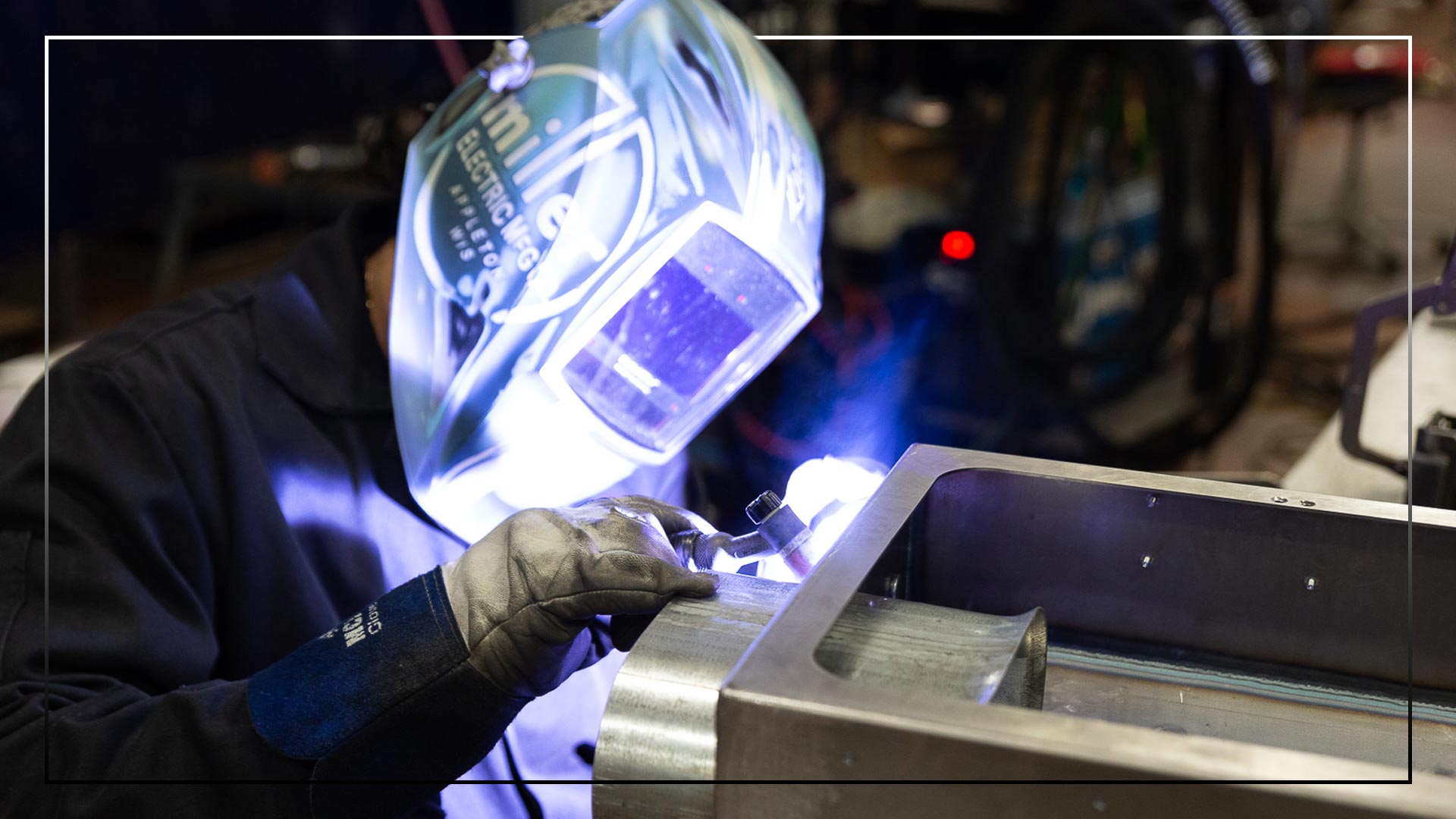
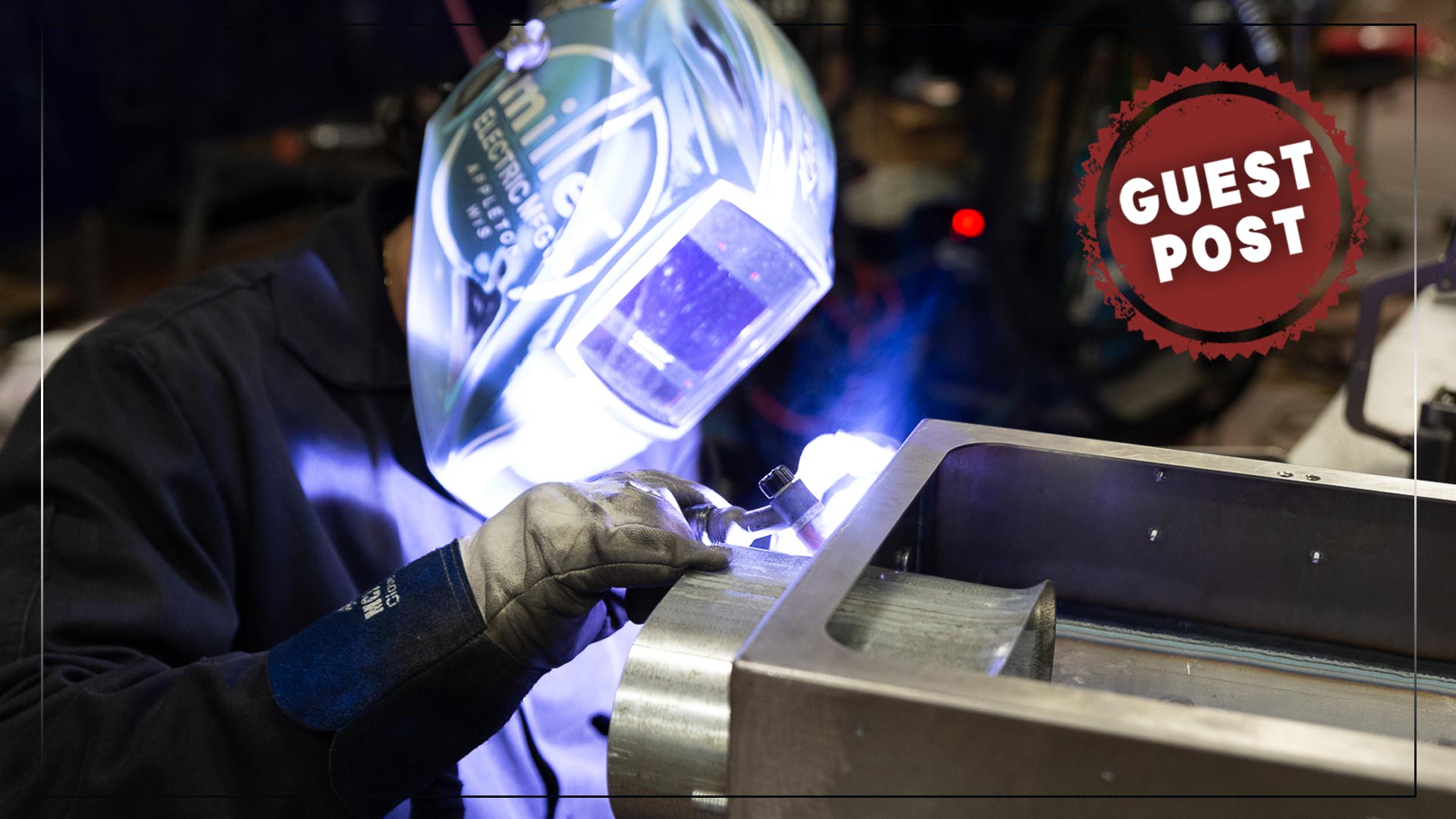
At All Metals Fabricating, our welding department takes pride in tackling challenges in everything from small components to large structural weldments. With a team that includes experienced, certified welders who can perform MIG, TIG, spot welding, and more, AMF is ready to support your needs.
But our capabilities are only part of the story. Another key to our precision welding services is the guidance we provide upfront with our design for manufacturing (DFM) insight. This input can help you reduce your costs and minimize risks through design adjustments.
Learn five of the most common recommendations our welders and engineers share when reviewing a new design.
It’s common for designs we see to rely heavily on welding, but longer welds can increase distortion, even with certified welders. As a result, production time and cost will increase, as well.
In many cases, we’ll suggest sheet metal forming as an alternative to reduce the amount of welding. Often, the simplest solution is to bend features rather than weld them on. The benefits are clear: bending is more cost-effective, improves a part’s appearance, and reduces finishing time.
If your assembly can’t be bent and truly requires extensive welding, we can support that! Even so, we may recommend small design adjustments to reduce weld length or make the process more efficient. For example, we might weld in planned segments or add tab-and-slot features to improve fit-up and reduce weld volume.
Changes like this will be simplest early in your process, ideally during your prototyping stage. When the conversation happens early, small design tweaks are easier to implement without causing disruption. But revising drawings after you begin to scale can lead to delays and added costs.
Material selection affects both the welding process and the final result. Stainless steel and aluminum are two of the most common materials we see, and they can be especially sensitive to heat input and distortion, depending on thickness and geometry.
Material also influences automation options and the potential for the fastest possible turnaround. For example, our robotic welding services can be a strong fit for repeatable MIG welding on thick steels if speed and consistency are a priority. But thin-gauge aluminum is rarely a good fit for our robotic welding.
If speed is your top priority, we can help evaluate whether material changes could lead to faster production possibilities.
We pair welding and grinding in the same department for a reason: many welded parts require post-weld grinding. Weld seams can leave an uneven surface that needs to be smoothed for painting, functionality, aesthetics, or any number of other reasons.
As a result, it’s important to remember that welding is only part of the labor involved. If a design includes heavy welding, that may drive significant grinding time, adding more cost and time to a project.
Tolerances that are routine in capabilities like CNC turning services aren’t always practical in custom metal fabrication, especially when welding is involved. Our precision machining department can hold tight specs on our new 5-axis Kitamura, but welded assemblies behave differently.
For many welded fabrications, tolerances around ±0.030" can be a reasonable range, but requirements vary by geometry, joint design, and inspection method. If you share your application, we can help you define tolerances that are suitable for performance without adding unnecessary costs.
These are a few of the most common recommendations we share, but every project is different. If you’re looking for input on how to simplify your design or optimize for cost, we’re ready to take a closer look with you.
Contact All Metals Fabricating today to request a quote or discuss your project!